How to Verify a Contractor Before Hiring Them in California
A Homeowner’s Guide to Licensing, Insurance, Workers’ Compensation, Permits & Identifying Legitimate Local Companies
Hiring a contractor for plumbing, water heaters, drains, water treatment, or home repairs can feel overwhelming — especially when every company claims to be “licensed,” “insured,” and “local.”
Unfortunately, not every company follows the rules. Some contractors operate without proper insurance, some improperly claim workers’ compensation exemptions while still using crews, and others advertise themselves as “local” without actually having a legitimate presence in the communities they target.
Before hiring any contractor, here are some important things homeowners should verify.
1. Verify the Contractor’s License
In California, contractors performing work valued at more than $500 (labor and materials combined) are generally required to hold a valid contractor license.
You can verify a contractor license directly through the California Contractors State License Board (CSLB).
What to check:
- License number
- License classification
- License status (active/inactive/suspended)
- Business name
- Workers’ compensation status
- Bond information
A legitimate contractor should willingly provide their license number. If a company refuses to provide it, that’s a red flag.
2. Check Workers’ Compensation Coverage
One of the most overlooked issues is workers’ compensation insurance.
Workers’ compensation coverage helps protect:
- workers injured on the job
- homeowners from liability exposure
- and the contractor’s employees
Why this matters:
If a worker is injured at your home and the contractor does not carry proper coverage, problems can become very complicated very quickly.
On the CSLB license lookup page, look for:
- “Workers’ Compensation: Active”
OR - “Workers’ Compensation: Exempt”
Important:
Some companies file exemptions claiming they have no employees.
However, if a company regularly shows up with multiple workers or installers, they should generally have proper workers’ compensation coverage in place.
If you see crews working but the CSLB listing shows an exemption, that may be worth asking questions about.
How to verify this:
On the CSLB license page, there is also a “Personnel List” section that shows the company’s officers or personnel of record.
In many cases, corporate officers or owners with at least a qualifying ownership percentage may legally exempt themselves from workers’ compensation coverage.
However, workers or installers who are NOT listed as officers or exempt personnel would generally still require proper workers’ compensation coverage if they are employees of the company.
In simple terms:
- If the company claims “no employees”
- but regularly sends multiple non-owner workers to jobsites
- homeowners may want to ask additional questions about coverage and compliance
3. Verify General Liability Insurance
General liability insurance protects homeowners if property damage occurs during the project.
Examples include:
- water damage
- accidental flooding
- damaged flooring
- broken gas lines
- electrical damage
- or other accidental losses
Not all contractors carry proper liability coverage.
Homeowners should feel comfortable asking:
- “Do you carry general liability insurance?”
- “Can you provide a certificate of insurance?”
Professional companies expect these questions.
4. Verify They Are Actually Local
Many companies advertise themselves as “local” while operating from completely different areas.
Some businesses:
- rent virtual offices
- use mailbox stores
- use fake local addresses
- or advertise heavily in cities where they have no actual presence
Ways to verify:
- Check the address listed on CSLB
- Look up the business on Google Maps
- Search the address itself
- Verify city business licenses where applicable
- Look for local reviews and completed projects
A true local company usually has:
- an established service history
- local customer reviews
- recognizable service vehicles
- and a real presence in the community
One easy way to spot questionable contractor listings is by checking whether the business information is consistent everywhere online. A properly operating company will usually have matching addresses across their CSLB license, Secretary of State filings, website, Google Business Profile, Yelp profile and other business listings. If all the addresses are different or inconsistent, that should raise questions.
You can also learn a lot by looking at where a company chooses to maintain its online presence.
Today, Google is the primary search platform most homeowners use to research local contractors. Legitimate local businesses typically maintain:
- a Google Business Profile
- Google reviews
- service area information
- photos of completed work
- and an established presence in Google Maps
If a contractor only appears on platforms like Yelp or social media, but has little or no Google presence at all, that can sometimes be worth looking into further.
While there may be legitimate reasons in some cases, homeowners should ask:
- Why is there no Google Business Profile?
- Why are there no Google reviews?
- Is the business actually established locally?
- Is the listed address legitimate?
These are all reasonable questions when hiring someone to work inside your home.
5. Ask About Permits
Certain plumbing and water heater installations require permits and inspections.
Examples may include:
- water heater replacements
- gas line modifications
- re-pipes
- sewer replacements
- and certain water treatment systems
Permits help ensure:
- code compliance
- safety
- and proper installation practices
If a contractor immediately says:
“We don’t need permits for anything,” that can be another red flag.
For example:
- water heater replacements often require permits
- pressure regulator installations may require code compliance corrections
- and gas-fired appliance installations must meet current safety requirements
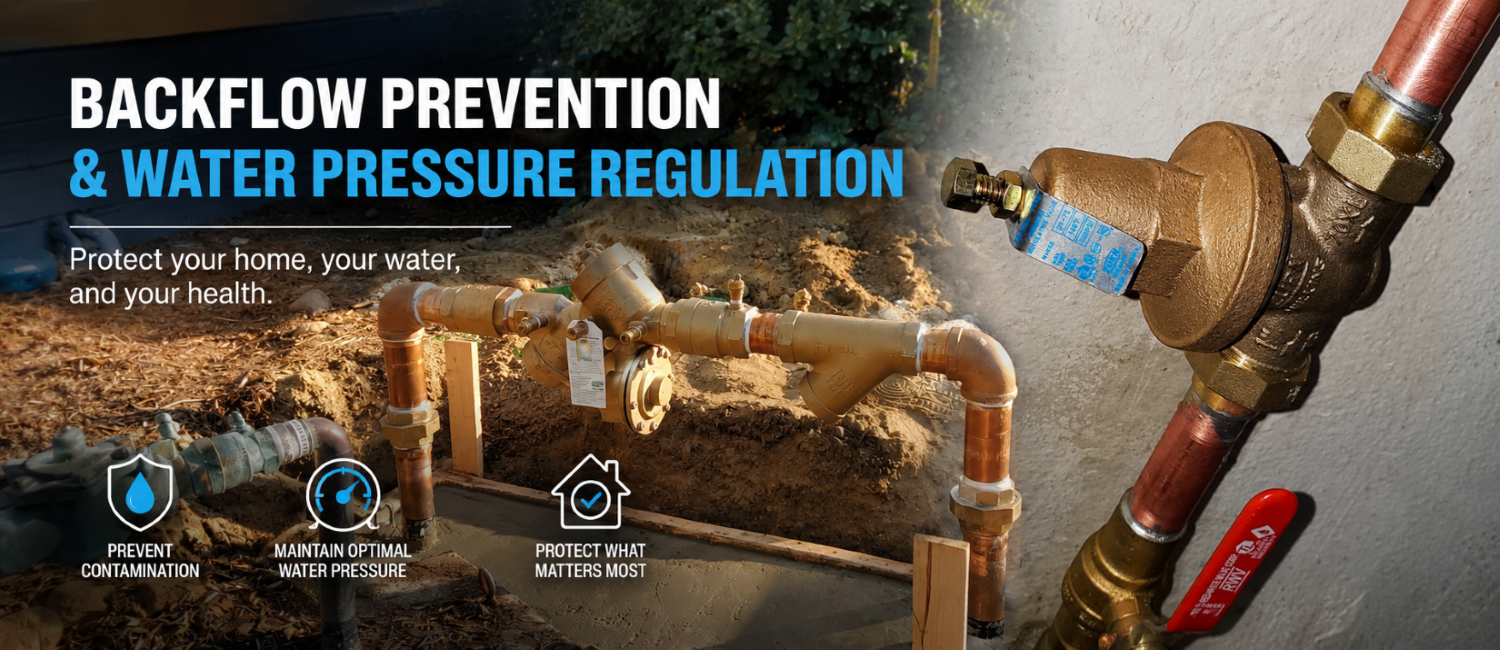
Homeowners considering water heater replacement, pressure regulator installation or water quality improvements can also learn more about our Water Heater Installation, Pressure Regulator, and Water Conditioning Services.
6. Read Reviews Carefully
Don’t just look at the star rating, read the reviews themselves.
Look for:
- professionalism
- communication
- long-term customer satisfaction
- warranty support
- and whether the company resolves problems properly
A trustworthy company should also have:
- consistent branding
- a professional website
- accurate contact information
- and transparent communication
7. Beware of Extremely Low Pricing
Price matters — but extremely low bids sometimes come with:
- lack of insurance
- lack of licensing
- corner-cutting
- no permits
- or improper installations
A properly licensed and insured contractor has real overhead:
- insurance
- bonding
- licensing fees
- payroll
- training
- permits
- and compliance requirements
Those protections ultimately help protect the homeowner.
If a price sounds too good to be true, it's worth asking why. In our article about a $1,800 dollar water heater installation, we break down a real-world example of how low-cost installations can result in missing code requirements, safety concerns, and costly repairs after the fact.
Final Thoughts
Most homeowners are not looking to become experts in contractor law or insurance requirements. They simply want someone trustworthy working in their home.
Taking a few minutes to verify licensing, insurance, workers’ compensation status, permits, and local presence can help avoid major problems later.
Before hiring any contractor:
- verify the license
- check insurance coverage
- confirm local presence
- and make sure the company is operating transparently
A reputable contractor should have no problem providing that information.











Share On: