
How Much Salt Does a Water Softener Really Use? The Hidden Costs Most Homeowners Never Consider

Most homeowners budget for the system—but not for the years of salt, maintenance, and water consumption that follow. Here's what you should know before investing in a water treatment system.
For decades, traditional salt-based water softeners have been marketed as the standard solution for hard water. While they can reduce hardness minerals, many homeowners are surprised to learn about the ongoing maintenance, expense, and environmental impact that come with owning one.
If you’re considering a water treatment system—or you’re simply tired of hauling bags of salt every month—it’s worth understanding the true cost of a conventional water softener and why more homeowners are switching to modern salt-free alternatives like the Pura-Flo DescalePLUS.
The Never-Ending Salt Cycle
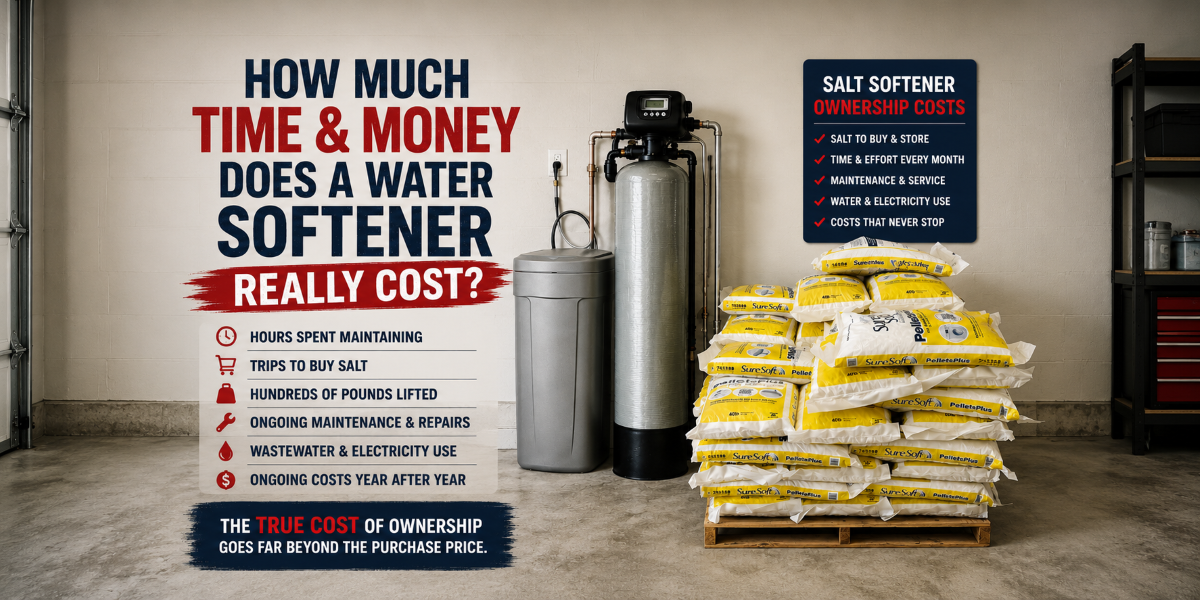
The average residential water softener consumes approximately 12 to 24 forty-pound bags of salt each year, depending on water hardness, household size, and system settings.
That means homeowners must:
- Purchase salt regularly
- Transport heavy bags home from the store
- Lift and pour bags into the brine tank
- Clean salt bridges and salt buildup
- Monitor salt levels to avoid system failure
For many homeowners, this becomes a monthly chore that never ends.
Over the life of a water softener, a household may handle thousands of pounds of salt simply to keep the system operating.
If your home suffers from hard water issues such as scale buildup, spotting on fixtures, mineral deposits on glass, or reduced appliance efficiency, our Water Treatment Solutions page explains the treatment options available for Southern California homeowners.
The Hidden Operating Costs
The purchase price of a water softener is only part of the story.
Traditional salt-based softeners also require:
- Ongoing salt purchases
- Additional water during regeneration cycles
- Electricity consumption
- Periodic maintenance and cleaning
- Replacement parts and repairs
While the monthly costs may seem small individually, they add up significantly over the lifespan of the equipment.
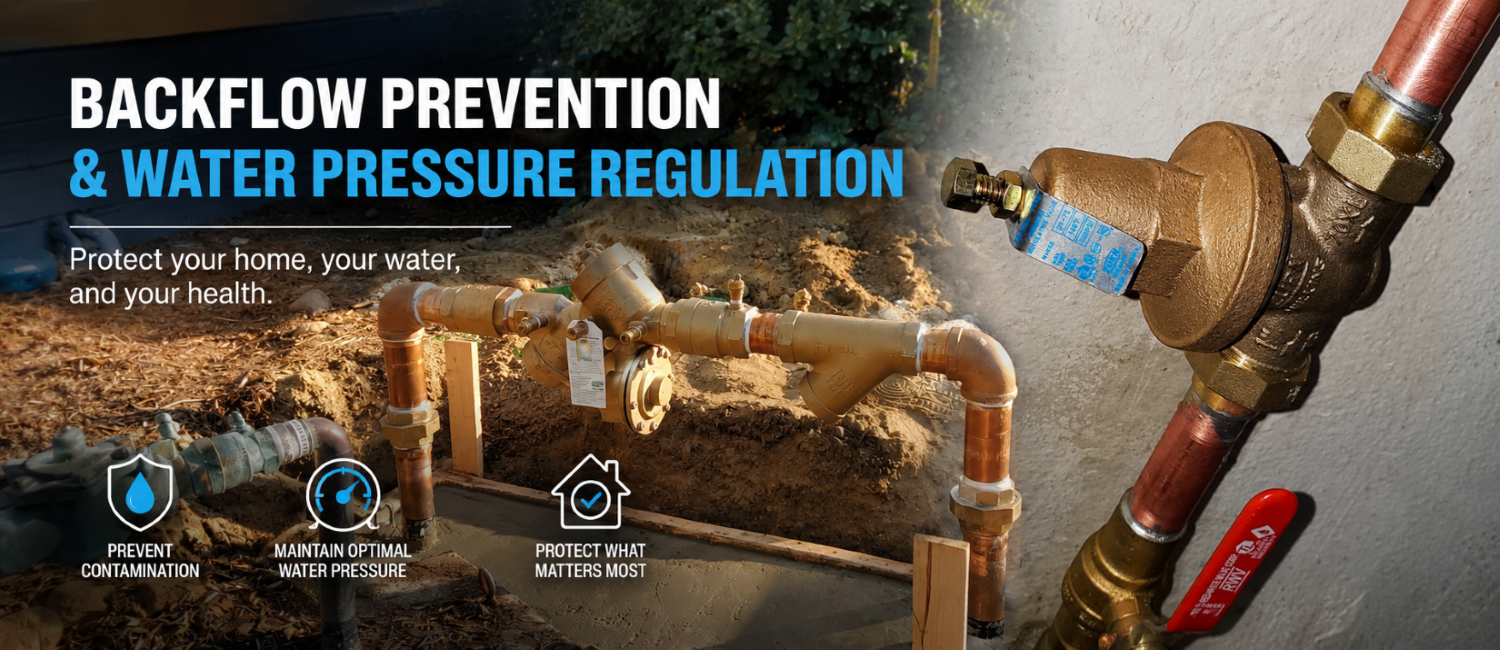
Hard water scale can also affect water heaters, tankless water heaters, plumbing fixtures, pressure-regulating valves, recirculation systems, ice makers, dishwashers, and washing machines. In areas with hard water, proper maintenance of your Tankless Water Heater and Pressure Regulator Valve (PRV) can help extend equipment life and improve performance.
Where Does All That Salt Go?
Many homeowners assume the salt simply disappears.
It doesn’t.
During regeneration, a water softener flushes concentrated brine containing sodium and chloride into the drain system. This process repeats thousands of times over the life of the equipment.
The environmental concern isn’t just one softener—it’s the cumulative impact of hundreds of thousands of systems operating year after year.
Excess salt discharged into wastewater systems can be difficult and expensive to remove. Elevated chloride levels have become a growing concern for municipalities and water agencies throughout California and other western states.
California’s Growing Restrictions on Salt-Based Water Softeners
Because of environmental concerns associated with chloride discharge, many California municipalities and wastewater agencies have adopted restrictions or limitations on new self-regenerating water softeners.
The challenge isn’t a single installation—it’s the cumulative effect of hundreds of thousands of systems discharging brine year after year.
Local water districts continue to face increasing pressure to reduce chloride levels entering wastewater treatment facilities, groundwater supplies, and recycled water systems.
While regulations vary by jurisdiction, the trend is clear:
Communities are increasingly encouraging homeowners to consider alternatives that do not discharge salt into the environment.
An Overlooked Problem: Improper Installations
Another issue is that many water softeners are installed incorrectly.
Improper drain connections, unauthorized discharge locations, and poorly maintained systems can increase environmental impacts and create compliance issues for homeowners.
Unfortunately, many property owners are unaware of where their system is discharging or whether it was installed in accordance with local requirements.
When multiplied across thousands of homes, these improper installations contribute to a much larger environmental problem.
Learn more: Are Water Softeners Illegal in California?
The Water Heater Problem Nobody Talks About
One often-overlooked consequence of traditional salt-based water softeners is their effect on a tank-type water heater’s sacrificial anode rod.
Most residential water heaters are manufactured with a factory-installed aluminum-zinc anode rod. The purpose of the anode rod is to sacrifice itself so the steel tank does not corrode. As long as the anode rod remains active, it helps protect the water heater from internal rust and deterioration.
What many homeowners don’t realize is that softened water can accelerate anode rod consumption.
Because salt-based softeners remove hardness minerals through an ion-exchange process and replace them with sodium, the resulting water chemistry can increase the rate at which the anode rod is consumed. As the anode deteriorates more quickly, the water heater loses its primary defense against tank corrosion.
In homes equipped with traditional salt-based water softeners, we often recommend upgrading to a magnesium-zinc anode rod, as it can provide improved corrosion protection under these conditions. However, even with a magnesium-zinc anode installed, the rod should typically be inspected and replaced every 12 to 18 months.
Unfortunately, very few homeowners are aware of this maintenance requirement.
As plumbers, we routinely encounter water heaters with completely depleted anode rods, severe internal corrosion, and premature tank failure. Homeowners are often surprised to learn that the water heater’s protective anode was consumed years earlier and was never replaced.
Once the anode rod is depleted, the tank itself begins to corrode.
This can lead to:
- Premature water heater failure
- Rust-colored water
- Increased maintenance costs
- Water heater leaks
- Reduced equipment life
- Unexpected replacement expenses
The irony is that many homeowners install a water softener hoping to protect their plumbing system, yet remain unaware that the system may be accelerating one of the most critical maintenance items inside their water heater.
If you’re already experiencing recurring water heater issues, visit our Water Heater Services page to learn more about inspection, maintenance, and replacement options.
Hard Water Doesn’t Just Affect Plumbing
Hard water scale can accumulate throughout a home’s plumbing system and contribute to:
- Reduced water heater efficiency
- Increased energy consumption
- Scale buildup inside tankless water heaters
- Shortened fixture lifespan
- Reduced flow through plumbing components
- Premature failure of pressure regulating valves
- Increased maintenance costs
Many homeowners first discover they have a hard water problem after experiencing recurring repairs or maintenance issues with their water heater or plumbing system.
If you’re already noticing scale accumulation, our Water Conditioning Systems page explains how modern salt-free technology can help reduce scale formation throughout your home.
A Better Alternative: Pura-Flo DescalePLUS
Unlike traditional water softeners, the Pura-Flo DescalePLUS does not require:
- Salt
- Brine tanks
- Regeneration cycles
- Electrical connections
- Ongoing salt purchases
Instead, DescalePLUS uses advanced scale-conditioning technology designed to reduce scale formation throughout the home’s plumbing system without producing brine discharge.
That means:
- No monthly salt purchases
- No hauling heavy bags
- No regeneration cycles
- No wasted water
- No brine discharge
- Virtually maintenance-free operation
For homeowners who want protection from hard water scale without the ongoing hassle and environmental concerns of a traditional softener, DescalePLUS offers a simple, modern solution.
The system is especially beneficial for homeowners who want to protect expensive plumbing investments such as Navien Tankless Water Heaters, conventional water heaters, recirculation systems, fixtures, pressure-regulating valves, and household appliances.
Why More Southern California Homeowners Are Choosing Salt-Free Water Conditioning
More homeowners are realizing that hard water treatment doesn’t have to involve hauling salt bags, maintaining a brine tank, wasting water, or contributing to chloride discharge.
Modern salt-free systems provide a cleaner, simpler approach to scale control while eliminating many of the maintenance concerns associated with traditional softeners.
For many families, the convenience alone is enough reason to make the switch.
For others, the environmental benefits and reduced maintenance requirements make the decision even easier.
The Future of Hard Water Treatment
The water treatment industry is changing.
Homeowners are increasingly looking for systems that provide effective scale protection while reducing maintenance requirements and environmental impact.
As communities continue evaluating the long-term effects of salt discharge, many property owners are choosing solutions that eliminate the problem entirely rather than simply managing it.
If you’re tired of buying salt, maintaining a brine tank, and worrying about regeneration cycles, it may be time to consider a different approach.
The Pura-Flo DescalePLUS provides scale protection without salt, without waste, and without the ongoing headaches associated with traditional water softeners.
Learn More
Interested in finding out whether a salt-free system is right for your home?
Visit our:
- Water Treatment Solutions page
- Tankless Water Heater Services page
- Water Heater Services page
- Pressure Regulator Valve Services page
Or contact us today to learn more about the Pura-Flo DescalePLUS and discover a cleaner, simpler way to manage hard water.
















Share On: